SLOW PROGRESS / FLOW STATE / THE ART OF LIVING
A rural escape set close to the North Devon coast, this secluded eco-retreat celebrates creativity, sustainability and slow living.
Words Tessa Pearson
Even torrential rain couldn’t dampen the experience of arriving at Praktyka, a creative retreat situated in a wild and beautiful part of North Devon, just below where the rivers Taw and Torridge cut through the countryside to meet the dramatic coastline. A series of winding, single-track country lanes lead you to the former farm, which sits within a peaceful enclave of ancient beech and oak trees, and is surrounded by green as far as the eye can see. Rushing to get out of the downpour, we tumbled into the Artist’s Barn carrying bags filled with beach towels, waterproofs and everything in between. The weather and the long journey swiftly faded from memory as we took in our home for the weekend: a painstakingly renovated and thoughtfully appointed 19th-century stone barn complete with a wood-burning stove for the colder months, or in our case, a typically unpredictable British summer.
he Artist’s Barn is one of three dwellings on the farm. Visitors can also choose to stay in the Dome, a spacious geodesic structure with a wooden pagoda containing a shower and outdoor kitchen, or the Cabin. The latter is a simple and comfortable space for two, with an outdoor shower and wood-fired bathtub. There’s also a welcoming, plywood-lined communal kitchen housed in a separate barn, which provides a space for guests to come together, should they wish. Both the Dome and Cabin were designed by award-winning architectural practice Rural Office, enlisted by Praktyka founders Ania Warzkowicz and Henry Trew to help bring their vision of a shared space for slow living into being.
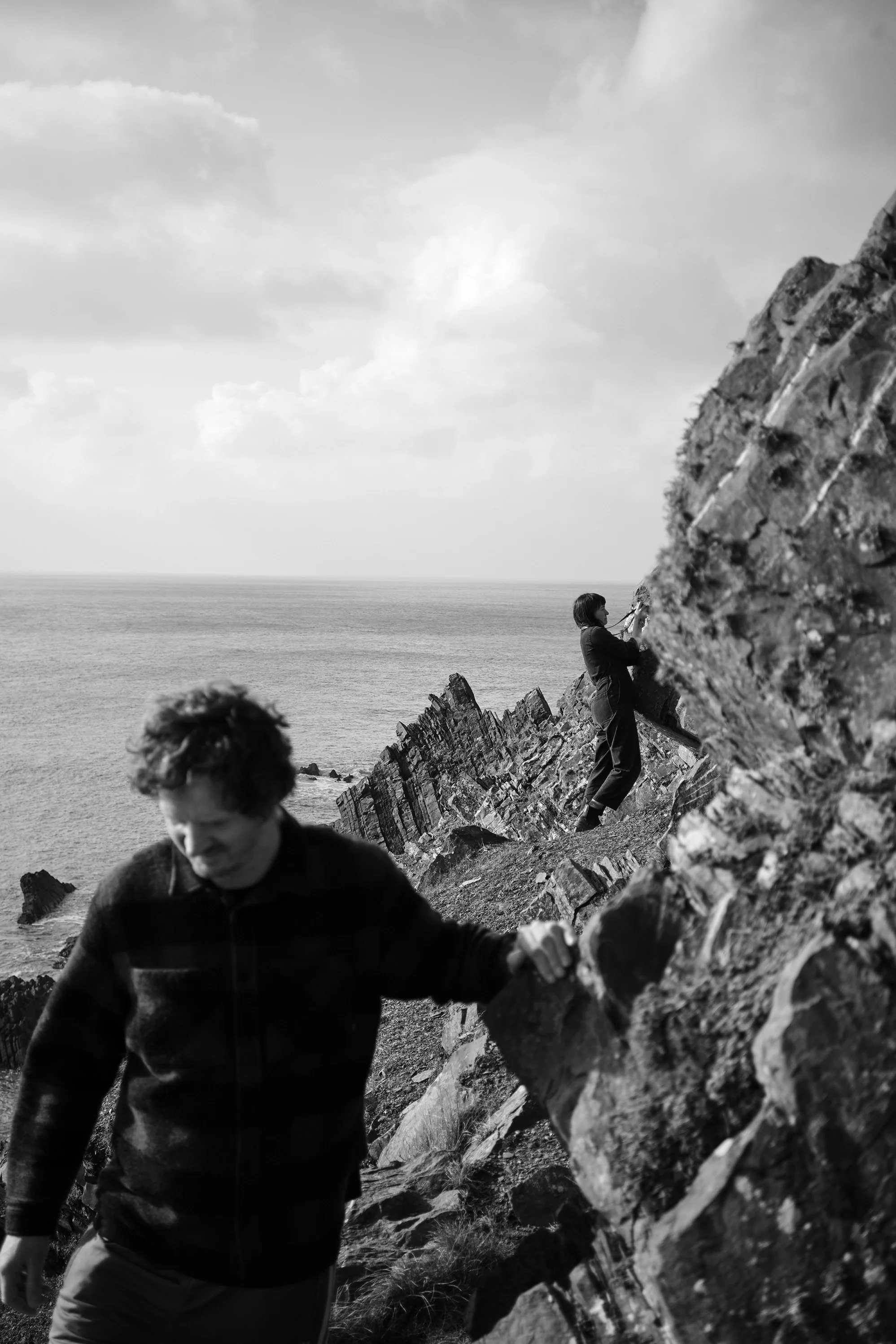
Ania and Henry moved to the farm six years ago, after leaving London in search of a less frenetic way of life. The idea of the retreat had been slowly crystallising in their minds after a series of sabbaticals that left them longing for change. ‘Some years ago, we took two months off and climbed a mountain in Nepal, which was so out of my comfort zone, but it was an amazing experience,’ recalls Ania, who is an artist, photographer and jewellery designer. ‘When we came back to London, there was something about our life that just didn’t feel right, which we experienced in a very physical way. We knew we needed to live somewhere much closer to nature.’
In 2017, Henry quit his job in the charity sector and the couple left the city, embarking on a six-month trip that took them to Poland, Spain, Portugal and France, seeking out creative retreats along the way and gathering ideas and inspiration for their eventual return home. ‘Slowly, and very organically, the concept of Prakytka came together, bound by a word that means ‘practice’ in Polish,’ explains Ania, who cites her upbringing in Poland’s Masurian Lake District as one of the key reasons she hankered for a move to more rural surrounds. ‘The practice of art, and creativity in general, is important for everyone. In an increasingly demanding world, it’s hard to carve out time for stillness and focused work. It’s something we have struggled with in our everyday lives and it’s at the heart of why we launched Praktyka.’
As with the evolution of the concept itself, the search for the retreat site was a gradual process. Ania and Henry deliberated between moving to Portugal, Poland, Wales and Cornwall, before a fortuitous property search led them to discover this hidden gem in the North Devon countryside, with views that stretch as far as Exmoor. The couple stuck out a year and a half with no heating — during which time Ania was pregnant with their son, Ziggy — before they were able to start turning the old farmhouse into a liveable home. After overhauling the main house, Rural Office founder Niall Maxwell worked with the pair on expanding the accommodation offering in a collaboration that involved a harmonious meeting of minds.
‘We spotted Niall’s Welsh home in a coffee table book that we found in New Zealand and loved the sound of his ethos,’ remembers Ania. ‘We carried that book around in a backpack while travelling, and when we returned home and eventually found the right property, we contacted Niall and he came on board to help us.’ Ania and Henry relished the process of working with Rural Office on the project, which they describe as being as much an exploration of art and philosophy as of architecture and design. Niall also worked with the couple on a sustainable strategy for the retreat, something the pair are passionate about, particularly Henry, who has a background in the environmental sector. A ground-source heat pump was installed under one of the fields for hot water and heating, while a bore hole and filtration system supplies their water. The retreat runs entirely on renewable energy, and natural construction materials have been used wherever possible.
In addition to Praktyka’s eco-credentials, Ania and Henry have created what can only be described as a pocket nature reserve. Their rewilding project has involved planting over 200 new trees, as well as creating a succession of secret gardens, which make the small farm a joy to explore for kids and adults alike. Turn a corner and you might come across a hidden swing or play area, or the opportunity to rest your eyes on a long view across the fields to the hills beyond. The planting also serves to ensure that everyone who stays at Praktyka enjoys the same feeling of seclusion. ‘It was very important for us to create privacy for each dwelling, so we’ve worked hard on the gardens,’ Ania explains. ‘We wanted to create a sense of wilderness that would immerse people in the experience of staying here.’
As well as offering numerous spaces for quiet contemplation, Praktyka is underpinned by a desire to bring people together, whether through art workshops, jewellery-making classes, hiking along the coastline or exploring the best wild-swimming spots. Next on Ania and Henry’s list is a purpose-built structure for yoga, which will sit lightly on the wildflower meadow. ‘Part of this idea of dedicating time to a practice also includes spending time with close friends and family. Henry has experience organising festivals and events, and loves the idea of people coming together to create something,’ says Ania, who has spent much of her creative career working solo. ‘It has been really interesting figuring out how to combine our two approaches with this venture.